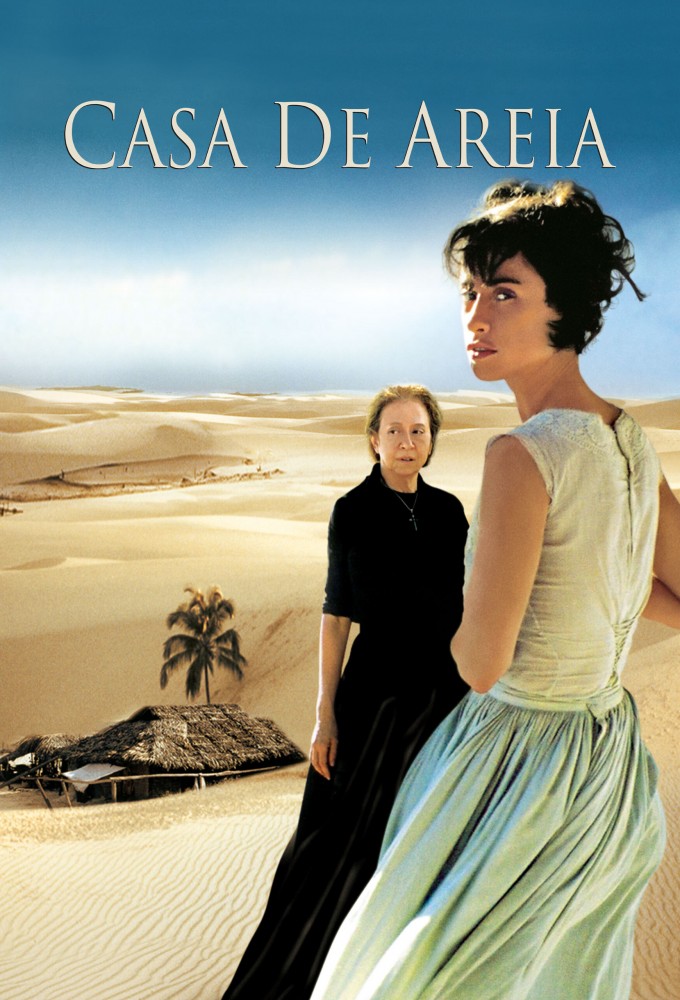
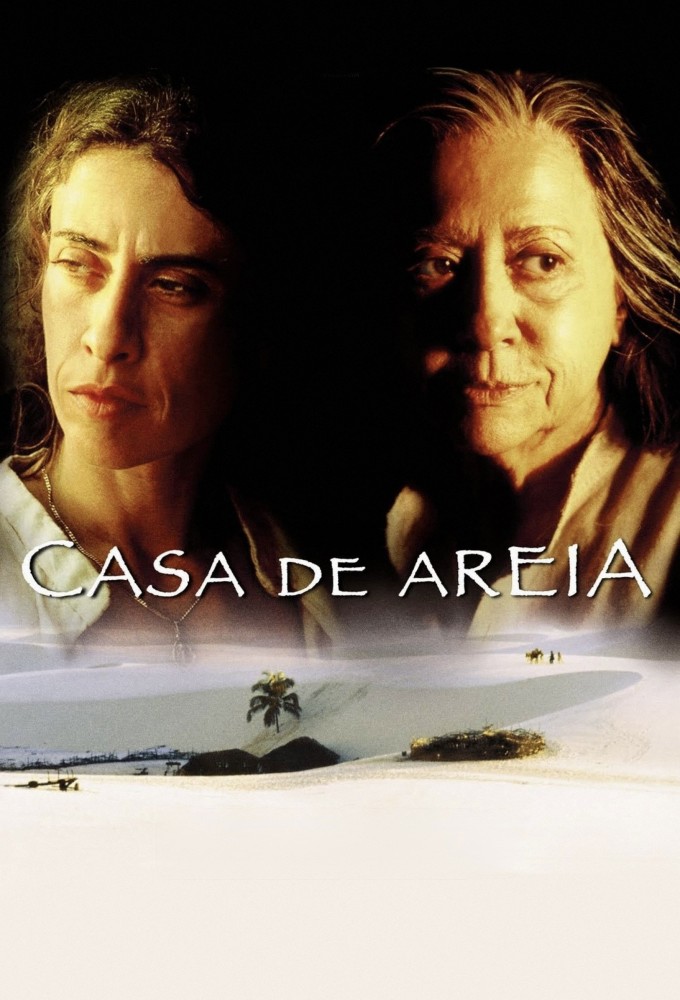
Após a morte do marido em um acidente, uma mulher grávida e sua mãe lutam para sobreviver no rigoroso deserto do Nordeste brasileiro com a ajuda de um morador local.
In 1910, pregnant Áurea (Torres) along with her mother, Maria (Montenegro) arrive at a remote, desert-like part of the Brazilian state of Maranhão—called the Lençóis Maranhenses—where her fanatical husband Vasco de Sá (Ruy Guerra) has relocated the family from the state's capital, São Luís, Maranhão, to start a farm. Soon the white settlers realize that they are not alone: a group of descendants of runaway slaves live in the area, in a settlement—generally known as a ''quilombo''—they call "The Island" because it is the only permanently fertile spot in a sea of sand where it rains only during the rainy season. Due to the madness of Vasco, Maria seeks to bribe the black settlers to take her and her daughter away, but they, while taking her money (it is basically useless in the local barter economy), do no such thing.
Após a morte do marido em um acidente, uma mulher grávida e sua mãe lutam para sobreviver no rigoroso deserto do Nordeste brasileiro com a ajuda de um morador local.
Tras la repentina muerte de Vasco, Áurea y su madre quedan abandonadas en este "laberinto de arena", atrapadas en un paisaje hostil que amenaza con enterrar su hogar. A través de las décadas (1910-1969), la película muestra la lucha por la supervivencia, el aislamiento, la obsesión por escapar y la relación amor-odio de tres generaciones de mujeres que se adaptan a su entorno, encontrando ayuda en un habitante local llamado Massu.
français
Magyar
Português - Portugal
English
Português - Brasil
español