Jonny Harris (Constable Crabtree in Murdoch Mysteries) travels across Canada with his comedy.
Jonny digs up dirt in the mining town of Coleman, Alberta.
Jonny fishes with some friendly folks in the town of Souris, PE
This episode, Jonny walks in the shadow of a giant, gets lost in a labyrinth and plays twister on some prehistoric petroglyphs.
Jonny learns from the people of Berwick, Nova Scotia, that when a barrel is shaken, the big apples rise to the top.
This episode Jonny meets the characters of Oil Springs, including a Jamaican wigmaker named Lady Bea, a lama named Gregory, a goat named Curry, and a chicken named Stir-fry.
Jonny pans for gold and learns that the true currency in Lytton, B.B. is trust in the future.
In the Season 2 premiere, Jonny fries up a big batch of fresh donuts, busts out the chainsaw to carve his very own totem pole, and picks up a fierce game of hoops.
Jonny loads boxes of 'nipples' (pipeline fittings), gets up-close and personal with a swarm of chickens, and tries his hand at a game of curling.
Jonny does some heavy 'mussel' lifting, goes back to grade school, and gets acquainted with the town ghost.
Jonny pampers the town's furry friends, samples a taste of maple heaven, and ziplines through the trees to catch a breathtaking view.
Jonny discovers the art of sausage stuffing, gets his boots dirty on some rugged terrain, and learns about a horticulturist's plans to grow medical marijuana.
Jonny goes spelunking, takes on a paper route, and gets his squares in order for bingo night.
Jonny visits a floundering community that is looking to its historic railway to get back on track.
Jonny visits an oil town excited for the completion of a new highway that will complete Canada’s road network from coast to coast to coast.
Jonny meets Neil Young's childhood friend, takes rifle shooting lessons from the town doctor, and goes adventure diving in a swimming pool.
Jonny puts on a "hard rock" show, straddles the Canada-US border, and picks up a game of shinny.
In this episode, Jonny gets toasty by a campfire, drives a Zamboni, and faces off against the town's hockey stars.
Jonny tears up the trails on a snowmobile, picks up some conversational Gaelic, and helps welcome a Syrian refugee family to the Maritimes
Jonny calls the shots at a cow auction, makes an order of horse nuts, and goes horseback riding to check on a herd of cows.
“Sometimes tragedy brings out the best in people.” A special episode of Still Standing on the anniversary of the Fort McMurray fire.
Jonny goes for a dive to explore some WWII wreck sites, gets some step dancing lessons, and has a kitchen party at Dicks' Fish and Chips.
This former booming resort town is fighting hard times and rising water in hopes of returning to its glory days. Jonny visits Manitou's "water park", delivers a monologue at the theatre, and tries to stay on target at the archery club.
"It's not about just building a canoe to put it on the lake. It's about sharing my culture." Jonny learns the art of birchwood canoe building.
Jonny goes for a motorcycle ride with the mayor, engages his core with some belly dancing, and discovers the true horse power behind chuckwagon racing.
Against their better judgment, the owner of a race car decides to let Jonny take it out for a spin.
Jonny gets a taste of some Curry in a Hurry, learns how to wave like a true princess, and finds out why the Sunfest Music Festival is so important to this town.
Friday afternoon means happy hour at Alice's — a gathering of seniors with surprisingly dirty minds.
Jonny takes in a stunning bird's-eye-view of Tumbler Ridge, BC, meets a paleontology power couple, and gets a bit of a helium high.
Jonny tastes some crunchy crickets, feeds a crowd of hungry gators, and gets an almost TOO-relaxing Thai massage.
When your town's grain elevators shut down and the economy grinds to a halt, what seems more logical than donning pointy ears and flashing a Vulcan salute?
Jonny discovers the power of hemp, makes some pierogies with the mamas and the babas, and picks up the beautiful art of Veselka dancing.
Jonny makes friends with the crossing guard, plays with magic, and indulges in a big, Indian feast.
Residents of Tignish are banking on new initiatives to get by, like harvesting sea plants for cattle, and the opening of an interpretive venue that celebrates one of Canada's greatest country singers.
Jonny bikes down Montana Mountain, tries his hand at Tlingit artwork and braves the bees to help expand the colony at the local apiary.
Jonny tries to keep up with the Run Club, harvests crops at the community garden and dips into the very serious ick-factor of making Kombucha.
Jonny helps prep some purebred bulls for auction, visits the town’s ‘Newfoundland Cul-de-Sac’ and gets taken hostage by the RCMP.
Ann Margetson, Poet Laureate of Cobalt, Ont., reads her touching poem for Jonny Harris.
As the oldest Danish community in Canada, New Denmark was once home to thriving potato farms, schools and even a renowned ski hill. But the aggregation of farming resulted in a population drop, cultural intermingling, and a loss of Danish traditions and businesses. But despite it all, New Denmark has made it to its 145th year. The locals are proud and passionate about their history and are doing what they can to keep their Danish traditions alive.
This young entrepreneur from Wilberforce, Ont., makes survival kits you can keep in your pocket!
Jonny meets two very special first-language Mohawk speakers, takes flight in a single-engine plane and goaltends for one of Team Canada’s floorball players.
Jonny is put to task on a bakery assembly line, has his rubber arm twisted to do some chocolate-tasting and learns the ropes about throwing a real punch.
Jonny gets a museum tour by its teenaged owner/operator, stumbles gracefully through a ballroom dancing lesson and visits the spa for a not-so-relaxing service
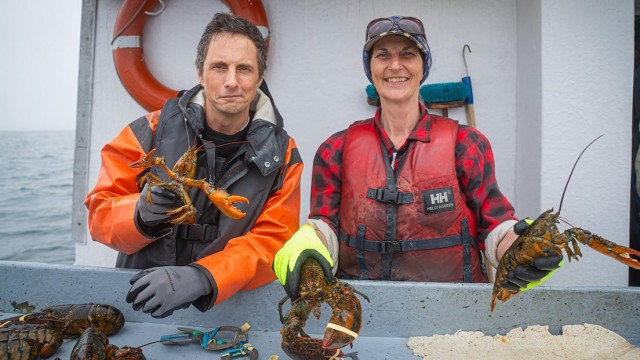
Jonny gets his feet wet in the world of sustainable shrimp trapping, scouts the future rocket-launcher site and goes kayaking with Canso’s youth group.
Jonny “drives” the manual Zamboni, feeds some prize-winning cows and learns how to make a Minto margarita.
Jonny Harris meets artist Peter Corbett in Wells, BC, and he paints the most beautiful winter scenes.
To kick off season 5 of Still Standing, Jonny attends a community potluck, spends time whale watching with Captain Mackie Greene and gets the inside scoop on this town with a host of accessibility challenges from 9th generation islander Theresa Mitchell.
Jonny lends a helping hand with making Italian sausage from scratch, has breakfast with former singer Cosimo Filane and his family and gets into some embroidery with boxing star Domenic "Hollywood" Filane.
Jonny goes sturgeon fishing in this seasonal resort town, learns about the local "anatomically-wondrous" Sasquatch sculpture, and relaxes by the notorious hot springs with local artist Aileen Penner.
Jonny shoots hoops with Canadian basketball star Justine Colley-Leger, shoots a 60-pound compound bow and gets a chance to discuss empowerment with Senator Dr. Wanda Thomas Bernard.
In May 2017, the Polar Bear Capital of the World unexpectedly became a fly-in community. A year of skyrocketing costs and unemployment are taking their toll but the community continues to hang on by its Northern grit, ingenuity and community spirit.
This former cod-fishing town is known as the gateway to the French islands of Saint Pierre and Miquelon. After Jonny snacks on croissants and fine cheese, he chats with the big cheese, Mayor Charles Penwell, and later attends a downhome shed party.
Jonny climbs up Mt. Helen, takes a tour through photographer Art "Baggy" LaFrambois's studio and gets a lesson in making crepes from an 11-year-old business owner.
Jonny cruises around town with author and historian Pat Collins, attends a High Tea, and takes a stab at Trivia Night with some locals while learning about this former cod-fishing town.
Jonny tries out blacksmithing with an expert knife-maker, gets his groove on learning French tap dancing and chats with Gravelbourg's Town Historian, Louis Stringer.
Jonny visits an Alpaca farm, tries his - er, feet at kick-sledding and goes for a moonlight ski through the town of Bristol.
In this former logging town, Jonny gets up close and personal with the trees while learning about 'forest bathing', visits a 40-acre grow-op that's hoping to make pot for pets, and joins the circus!
In what might just be "the funnest small town in the country," Jonny learns how to sit-ski, takes a winter safety driving course and takes part in the apres-ski 'shoot the boot' tradition.
In the season finale of Still Standing, Jonny visits the second largest reserve in Canada and gets a chance to chat with Astokomii Smith (Calgary Stampede First Nations Princess), visits a spooky film set and learns about Indian Relay Racing with former team racers Allison Red Crow and Cody Big Tobacco.
The future is uncertain for environmentally-sensitive Pelee Island, but those who call the island home are committed to ensuring that their unique jewel is around for generations to come.
Without any industry or formal government, 'making it' in Bear River requires a sense of enterprise, a communal spirit and a touch of the outlaw.
Lillooet's forestry-based economy is heading downhill — permanently. But its rugged residents are committed to fighting the good fight to ensure they can stay in their beautiful town.
When the bottom fell out of Southwestern Ontario's tobacco industry, Vittoria's farmers were forced to reinvent themselves and figure out how to farm different crops on the same land in order to survive.
When a highway bypass connecting Newfoundland's Great Northern Peninsula to the rest of the province was paved, Woody Point became a dead end with a grounded ferry. Since then, the town has managed to reinvent itself as a world-class destination.
In 2024, Pinawa's nuclear research facility and main employer are slated to be decommissioned, which has Pinawanians working hard to make sure that doesn't spell the end for their unique town.
Ingenuity and resilience are hallmark traits of Cap-Pelé, a small Acadian fishing village in New Brunswick that has seen its fair share of struggles.
Ever since the closure of a nearby mill shut down Botwood's busy port, the town has been working hard to revive industry and draw former residents back home.
When oil and gas was struck elsewhere, Turner Valley was left with not much more than abandoned wells and an out-of-date processing plant. But a fresh new crop of entrepreneurs is emerging from the ashes and redefining this former boomtown.
The economy of Rankin Inlet has seen its ups and downs, but the struggles that come with living in this remote and unforgiving landscape remain constant.
Locals like to say that ‘all roads lead to Hope.’ It’s a place to gas up and a place to ‘go,’ but locals want it to be known that the town is more than just a place to pee - it’s a place to be.
When Port Stanley’s prosperous commercial fishing industry collapsed, the beach town was left with an identity crisis and an uncertain future.
While its tourist train dollars are long gone, the proudly-weird town of Wakefield is reimagining itself as a place known for culture and outdoor fun.
Things looked bad for Chemainus when its sawmill closed in 1983. Then, the town used gorgeous murals to draw in tourists. Now it’s looking for the next generation of visionaries to keep it on the map.
After nearly 40 flood-free years, the township of Minden Hills has developed a flooding problem. But as the community digs out, they also deepen their commitment to one another.
Middleton - halfway between Halifax and Yarmouth - was a busy hub known for its two railway lines. But when the trains left and the exports stopped, Middleton found itself in the middle of nowhere.
From its roots as a farming community, to its unlikely transformation into an artists’ hub known for its thriving LGBTQ community, the village of Warkworth has become a beacon of resilience.
In 2018, Oxford got famous for a 40-metre-wide sinkhole that shut down much of the town. But they have a sense of humour about it and have made shirts, cakes, even Twitter accounts for the sinkhole.
The largest Métis community in North America, St. Laurent has struggled with a flood and rural decline. But after much rebuilding, the spotlight is finally shining on this town in a whole new way.
For decades Fenelon Falls made wood products from lumber to Tinker Toys - until the industry moved on. Now the town is becoming a vibrant destination for newcomers, cottagers, and day-trippers alike.
The seafaring town of Gibsons, BC, once made famous for The Beachcombers is reinventing itself as a regional hub for Filipino culture, a tourist destination and a paradise for beer lovers.
Oneida Nation of the Thames is hard at work reclaiming the economic, cultural, and spiritual practices that were banned by government policies over the past 100 years. Now that the days of hiding your cows from The Indian Agent are gone, the Oneida are finally beginning to thrive.
In the summer of 2021, Morden, MB experienced a drought so intense, the community's drinking water was at risk and a state of emergency had to be declared. One of the top-five fastest-growing communities in Manitoba, with an immigration program that is the envy of small towns across the country, Morden has a booming industrial economy and a world-renown collection of aquatic fossils to entice tourists.
After the loss of its local fish, fur, and caviar industries, and the 2015 downturn in oil and gas, Lac La Biche, Alberta is looking to reinvent itself into a community that's more vibrant than ever, with luxury teepees, 3D archery, and the best gas station bathroom in the country.
Goderich, ON is well-known as "Canada's prettiest town." It was also devastated by an F3 tornado in 2011 that destroyed its downtown. It's now rebuilding towards a bold new future.
Perched on the most westerly edge of Canada and despite its incredible beauty, Ucluelet is having to work hard to attract tourists from its well-known neighbour, Tofino.
Markdale ON, Canada's self-proclaimed "Ice-Cream Capital," took a hit when its all-important ice cream factory burned to the ground. Thanks to a complete rebuild of the town's major employer and the influx of COVID-era newcomers from the city, Markdale isn't just reclaiming the glory it once had, it's making itself into a community that's more vibrant than it was even before the fire.
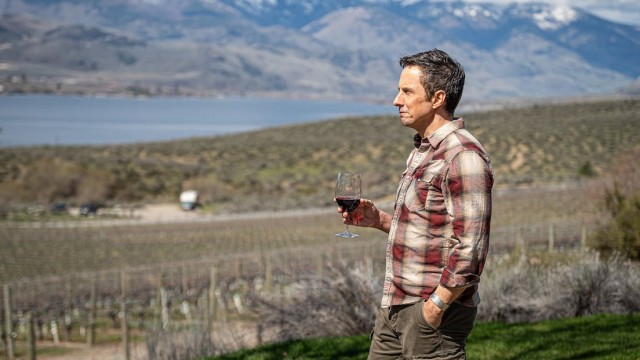
After decades of decline in its traditional fruit tree and cattle ranch economy, Okanagan Falls is banking on a new crop to turn things around: the intoxicating wine grape.
The remote, mining town of Wabush is a community built for one purpose: extracting iron ore. Thanks to Cain's Quest, one of the longest snowmobile races in the world, long-time residents and newcomers alike have figured out how to turn Wabush from "the middle of nowhere" to the centre of it all.
New Richmond, QC sits at the junction of two rivers and three cultures: Mi'kmaq, French, and English. When the town mill closed, it reinvented itself as a hub of rally car racing, Mi'kmaq culture and world-class fly fishing.
For 100 years, Amherstburg was famous for its amusement park. When the park closed, locals turned to a new attraction that will never go out of style: Amherstburg’s remarkable heritage.
For over one hundred years, small-scale farming and logging fuelled Gracefield's economy, but it a hit a slump in the 1990s. Now things are turning around thanks to newcomers and new interests.
For 50 years, this tiny town was an air force base where thousands of pilots learned to fly. When the base closed, Southport transformed into a new kind of community.
Catastrophic fires ripped through the community of Slave Lake over a decade ago, but the town has risen from the ashes and become more resilient than ever.
Dawson City's claim to fame is the brief Klondike Gold Rush at the turn of the 20th century. Every year tens of thousands of tourists flock to town to soak in the community's unique culture and history. COVID-19 put a stop to this thriving industry which is still dealing with the repercussions of the pandemic.
Home to the world's largest stands of old-growth red and white pine forest, it's no surprise that Temagami, Ontario is synonymous with old-growth and the struggle to balance economics and conservation.
In the spring of 2013, High River, Alberta experienced the worst flooding event in the province's history. Locals needed to lean on each other to overcome this natural disaster, which they did through hugs, balloons, pies, dance and the country-western traditions the town is known for.
M'Chigeeng First Nation is located on Manitoulin Island, which for thousands of years was a key stop on a traditional trade route and a political and spiritual centre for the Anishinaabe people. This all began to change dramatically when a series of treaties limited their freedom of movement and cut off the community from their traditional lands.
For years, airliners on the way to Europe needed to stop in Gander to refuel, making it "The Crossroads of the World." When planes no longer needed to stop in town to refuel, Gander reinvented itself with new businesses and new residents, and, after its heroic actions on September of 2001, (and an award-winning musical that commemorated this event) Gander has once again became a globally-recognized destination.
The forced relocation of the Membertou First Nation 100 years ago from the coast of Cape Breton to just outside downtown Sydney, Nova Scotia sent the community into crisis. Thanks to a bold economic plan, the Membertou First Nation has successfully pulled off a stunning transformation from crisis to prosperity.
This Indigenous community beat out 25 others to build the largest First Nations’ casino in Canada.
After the town's cannery shut down, Prince Rupert reinvented itself as a global shipping hub.
After the closure of Smiths Falls’ iconic Hershey factory, Ontario’s “Chocolate Capital” reinvented itself as place where new recreational and service sector businesses can thrive.
When Nova Scotia Textiles Ltd closed its doors after 106 years in operation, Windsor, NS embraced its reputation as the home of massive pumpkins and its claim as “the birthplace of hockey.”
For almost a century, the Sullivan Mine was the heart and soul of Kimberley, BC. Now, this mountain town's comeback story includes a make-believe Bavarian village.
After the town's uranium mine went bust, Elliot Lake turned to of another precious resource: some of the most affordable real estate in the country.
Sioux Valley Dakota Nation in Manitoba are now bringing back the buffalo and reconnecting with their past.
The local steel industry collapses and New Glasgow embraces art, its diverse history and its community spirit.
In the heart of Canada’s only desert, the Osoyoos Indian Band (OIB) turned hardship into an amazing comeback story. In 1968, they launched Canada’s first Indigenous-owned vineyard and today, the OIB runs more businesses per capita than any First Nation in Canada and is a model of Indigenous entrepreneurship.
Glace Bay, Nova Scotia was the birthplace of Canada’s underground coal mining industry. Immigrants from all over the world came to work in its 12 mines, which supported military operations during both world wars. With the rise of oil and electric heating, the demand for coal declined, and two fatal accidents in the ‘70s and ‘80s forced the operators to shut down the mine. Thousands of residents moved out of town, setting off a trend that continues today with the town still losing about 10 per cent of its population every five years. But Glace Bay is now focused on economic renewal through small business and tourism.
Arnprior was once the world’s largest helicopter and commercial plane parts hub, serving RCA, the U.S. military and Boeing, employing hundreds of people. But after 9/11, demand collapsed and a decade later, the remaining jobs were moved to Mexico. By Christmas 2023, the Arnprior plant was shut down for good. Today, the facility sits empty, but the town is finding new ways forward.
Grand Manan, a foggy island in the Bay of Fundy, is a spawning grounds for herring and known as the “Smoked Herring Capital of the World.” But as fish stocks declined and government regulations increased, the smokehouses closed, and the town shifted to canning. When the last canning plant shut down in 2004, the town leaned into new ways to boost its economy, while celebrating its past.
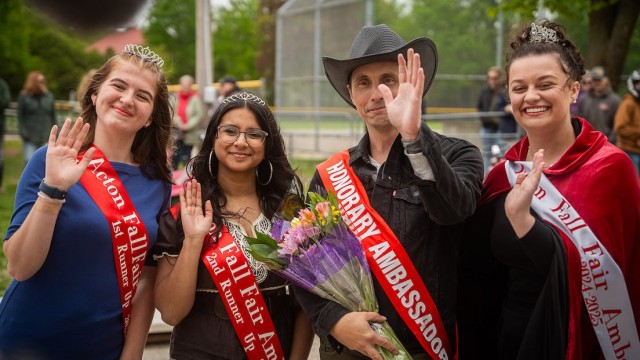
Acton’s nickname was “Leather Town.” It was home to The Beardmore Tannery, which employed approximately 2,000 workers in its sprawling one-million-square-foot complex and The Olde Hide House, which became Canada’s largest leather store thanks to a clever ad campaign. The tannery closed in 1986, but the store held on until January 2025. Now that its leather era is officially over, Acton is pivoting to a new identity built around wildlife, innovative businesses and agricultural fairs.
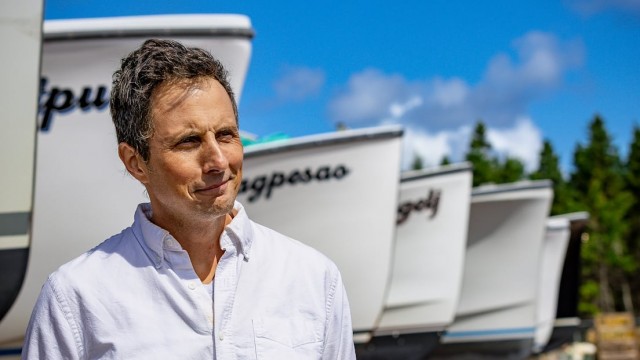
Lennox Island (L'nui Minegoo) is a Mi’kmaw community in Malpeque Bay off the northwest coast of Prince Edward Island that lies only two metres above sea level. Today, the island is facing the serious challenge of climate change. Fields where elders once played sports as children are now underwater; roughly 272 acres have already disappeared. The Mi’kmaw Confederacy of PEI has partnered with the University of Prince Edward Island’s Climate Lab to study the problem, and local leaders are now fighting to protect the land, culture, and way of life before it’s too late.
Flin Flon was once home to 17 mines, pulling thousands of tons of copper, zinc, silver and gold out of the ground every year. In the 1980s, ore prices collapsed in a global recession, and by June 2022, the last ore was extracted, signalling the end of an industry that sustained its inhabitants for generations. In June 2025, Flin Flon experienced another crisis when massive wildfires forced its evacuation, but the town keeps finding ways to carry on.
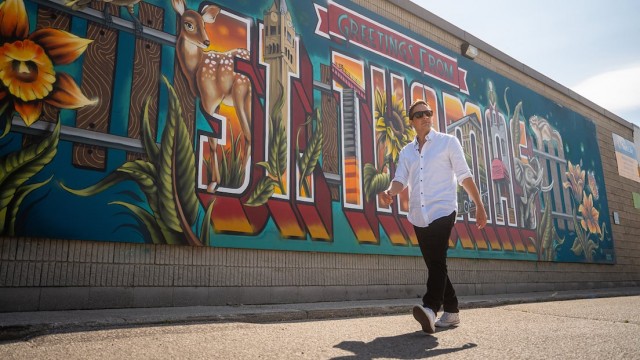
For decades, St. Thomas, Ontario, was a symbol of Canada-U.S. cooperation. In the 1960s, Ford opened a massive plant, rolling out Crown Victorias, Grand Marquis, and Town Car sedans. In 2011, as consumer demand shifted towards SUVs, the plant shut down. The town fought back and recently secured a $7-billion EV battery factory. But now, with trade tensions rising between Canada and the U.S., life looks uncertain for St. Thomas and its remaining autoworkers.