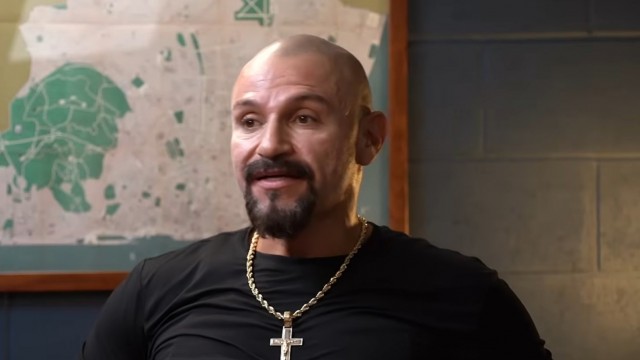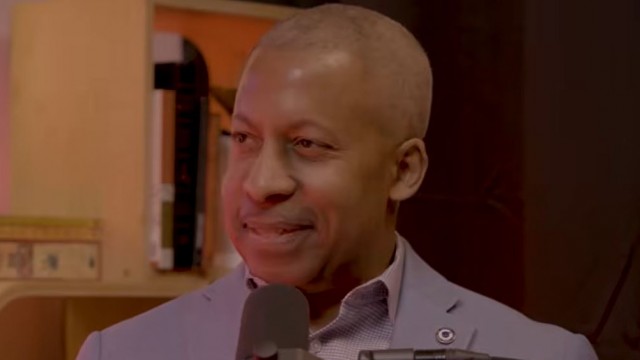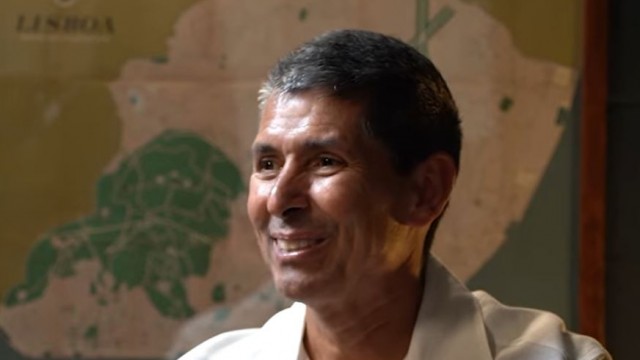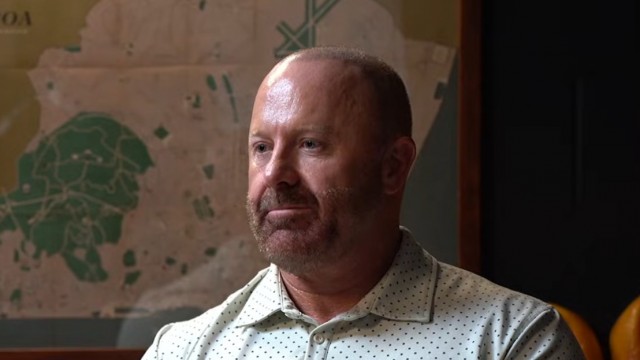
Pro skater and actor Fabian Alomar takes Mariana from L.A.’s skate scene to years in a high-security prison, where survival meant being ready for anything - even stashing blades where the sun doesn’t shine.
FBI veteran Kurt McKenzie joins Mariana for the inside story of Operation Oxy Alley- the takedown of what’s widely described as the largest pill-mill trafficking operation in U.S. history. Mariana recounts her own investigation and how it led to her being chased down I-95 by the brothers at the center of the case, and how it wasn’t the last McKenzie investigation she got pulled into.
When Michael Santos was sentenced to 45 years in federal prison for cocaine trafficking, he turned a cell into a classroom, earning degrees, writing books, and, inspired by Frederick Douglass, becoming a leading voice for reform. He tells Mariana how the transformation happened and what freedom looked like after decades behind bars.
Days before reporting to prison, Mathew Bowyer, the bookie at the center of the Shohei Ohtani gambling scandal, sits down with Mariana to walk her through his illegal betting operation, why it collapsed, and what he believes Ohtani knew.
At 23, Sequoyah Thiessen moved to L.A., believing the “Rehab Riviera” would help her kick opioids. Instead, she was pulled into the shadow economy of fraudulent rehab programs, where people in crisis are bought and sold on a multi-billion-dollar black market. She sits down with Mariana to talk about how this dangerous underworld works, who profits, and the way she turned her life around.
Rob Archuleta takes Mariana from his meth-fueled days in Las Vegas to the grueling yet rewarding crucible of Ironman, tracing why he quit drugs and how the scrappy running club he founded, Addict2Athlete, is transforming lives.
Aliia Roza says she was trained by Russian intelligence in “sexpionage” and later defected after falling in love with one of her targets. She shares her straight-out-of-Hollywood story with Mariana.
At 21, Lisa Phillips was assaulted by Jeffrey Epstein, an ordeal that marked the start of years of grooming and manipulation. In this conversation with Mariana, she opens up about the trauma she endured, the system that enabled it, and her ongoing fight for justice.
Todd Thomas’s daughter was 12 when he discovered she was being groomed by a child predator. What he did next changed the course of his life. Mariana talks to Todd about the moment he found out, the choices he made, the failures that let this happen, and how he’s turned pain into purpose.
Justin Paperny is a former stockbroker turned convicted felon. In this episode, he takes Mariana from the schemes that landed him in federal prison to how he now coaches white-collar criminals on surviving incarceration and rebuilding their lives.
This week on The Hidden Third, I speak to Anna Sorokin, better known as “Anna Delvey”, the infamous “fake heiress” whose real-life story was later dramatized in Netflix’s “Inventing Anna”. Anna posed as a wealthy German socialite, worked her way into New York’s elite circles, and used deception and manipulation to get banks, luxury hotels, and even friends to bankroll her lifestyle – a modern case study in scams, grifting, and image. She was convicted of theft of services and grand larceny and served time in prison, becoming one of the most recognizable names in high-society con artistry.
This week on The Hidden Third, I sit down with Owen Hanson, known as “O-Dog” — a former USC athlete whose hunger to win at all costs spiraled into a criminal operation spanning sports betting, drug trafficking, and money laundering. Hanson’s story was recently featured in Mark Wahlberg’s docu-series Cocaine Quarterback. But this conversation goes deeper than the headlines. He tells me how it started with his own performance-enhancing drug use — and how, in his early twenties, it escalated into a high-stakes enterprise with international routes and ties to a major Mexican cartel.
In this episode of The Hidden Third, Mariana sits down with Arman, an underground hacker involved in the infamous Xbox Underground case -- an alleged conspiracy federal investigators said targeted Microsoft and its partners and was valued by the FBI at more than $100 million. Arman says he’s been hacking since he could type. Diagnosed with ADD, he found an early obsession and talent in computer programming, spending months in grade school learning how to break into systems most people didn’t even know existed. What started as a game quickly escalated: by fifth grade, he was hacking into his school’s mainframe, and soon after he claims he’d built a sprawling network of bots, giving him the power to control and monetize massive amounts of computing resources.
In this episode, I sit down with MS NOW correspondent and bestselling author Jacob Soboroff for a candid conversation about what it takes to report on the stories that shape our country, and the personal cost that comes with it. Jacob shares why he became a journalist, the biggest lessons he's learned in the field, the toll his work has had on his family, and even some secrets he's never divulged publicly. We talk about his groundbreaking reporting on the Trump administration's family separation policy – what he saw firsthand inside migrant child detention facilities and what went into writing his book Separated. Jacob reveals what has stayed with him long after the headlines moved on, and warns that families are being separated at an even bigger scale during the current immigration raids.
Eric Balliet spent 25 years with the Department of Homeland Security - first with the CBP and then with ICE - arresting dozens of human traffickers, smugglers, and child predators. He led the wiretap strategy that resulted in the arrest of Joaquin "El Chapo" Guzmán—not once, but twice—and was named Federal Law Enforcement Association's Agent of the Year.
Kari Ferrell became known as “The Hipster Grifter” after her cons went viral. In this episode of The Hidden Third, Kari joins me to talk about how her scams worked — from bad checks to stealing from friends and lying about being a cancer survivor — and how things escalated after she moved from Salt Lake City to New York City, where she landed a job at VICE. We dig into what was driving her at the time, how easy it can be to manipulate trust, and what it’s like to become a public villain on the early internet. Kari walks us through the consequences, the fallout, and what accountability and rebuilding look like when your name becomes synonymous with a grift.
At 14, Christian Picciolini was a lonely kid from an Italian immigrant family in Chicago when he was recruited into the Chicago Area Skinheads — one of America's first neo-Nazi skinhead groups. By 16, he was leading it. He fronted white power punk bands, helped merge his group with the violent Hammerskin Nation, opened a record store selling hate music, and toured Europe playing to thousands. For years, he recruited young men into a movement built on violence and fear. Then something broke. And in 1996, he walked away. Today, Christian is one of the most important voices in the fight against extremism. He's the author of “White American Youth” and “Breaking Hate”, and has spent decades helping people leave hate groups — doing the painstaking, one-on-one work of deradicalization.
What happens when one of the most powerful corporations in the world – Amazon – decides your family is a threat? Amy Nelson, attorney, mother of four, and founder of The Riveter, found out the hard way: frozen bank accounts, FBI raids, federal subpoenas, and the full weight of the Department of Justice deployed against her family without a single charge being filed. In this episode of The Hidden Third, Amy sits down with Mariana to break down exactly how a company so powerful that it could weaponize the federal government against a single family used civil asset forfeiture and its relationship with federal law enforcement to try to force a guilty plea from an innocent man — and how her family refused to break.
Sonny Von Cleveland survived years of childhood sexual abuse, 18 years in prison, and 19 months in solitary confinement. But it was in that isolation cell where everything changed — through daily conversations with a Muslim mentor in the cell across from his, Sonny found accountability, forgiveness, and a reason to live differently. Today he mentors at-risk youth in juvenile detention centers across Southern California, serves on Riverside County's Juvenile Justice Coordinating Council, advocates with the Anti-Recidivism Coalition in Los Angeles, and leads The Von Cleveland Foundation. He was named Palm Springs Person of the Year in 2023 and has received Congressional Recognition for his work. His memoir "Hey White Boy: Conversations of Redemption" is the raw, unfiltered story of how a child failed by the world around him found his way back — and decided to make sure others don't walk the same road.
What does it actually take to bring down a drug network? Former undercover narcotics detective Britt Elmore spent years embedded inside the operations most people only see in crime dramas — building cases against dealers, managing informants, and navigating the moral gray zones that define modern drug enforcement. In this episode, Britt pulls back the curtain on how undercover operations really work: the mechanics of infiltrating criminal networks, the fragile trust between officers and informants, and how drugs move from international suppliers all the way down to local street corners. He traces the full supply chain of the underground drug economy — and explains why it continues to evolve faster than law enforcement can keep up.
Marta Barreto's story begins in the darkest of places — years of sexual abuse by members of her own family. That early trauma set off a chain reaction: addiction, exploitation, and eventually prostitution and prison. A cycle that traps millions of people worldwide and that very few manage to escape. In this episode, Marta opens up to Mariana about the psychological mechanisms behind exploitation — the vulnerability predators seek out, the control they exercise, and the barriers that make it nearly impossible for victims to break free. She also talks candidly about her time in prison, and what incarceration looks like when the system fails to address the root causes of why people end up there.
At 11 years old, Coss Marte was hustling on the streets of New York City's Lower East Side. By 17, he was making over $2 million running what he claims was the first 24/7 drug delivery operation in NYC — bringing cocaine and weed on demand across the five boroughs. Then a betrayal inside his own team brought the entire empire down, and he was suddenly facing up to 25 years in federal prison. Behind bars, a doctor delivered a brutal warning: his cholesterol was dangerously high, and unless he completely changed his lifestyle, he would have a heart attack before turning 30. Faced with that reality — and a transformative experience in solitary confinement — Coss made a decision that would change his life. He started working out in his cell, recruited fellow inmates to join him every day, and lost 70 pounds. He also did something most people in his position never do: he wrote a business plan.