Discover the story behind the defensive wall, stretching thousands of kilometres, built by the Third Reich to protect themselves from the Allies.
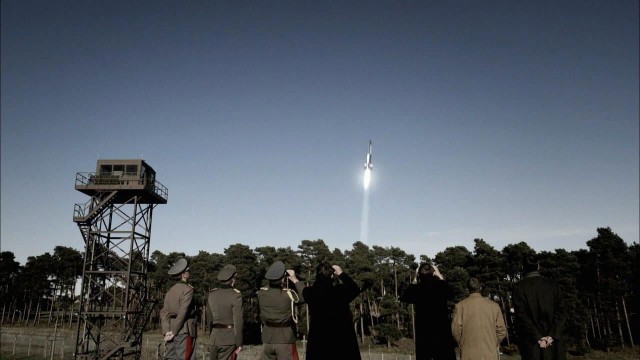
Discover how Nazi scientist Wernher von Braun heralded the birth of ballistic missiles and laid the technological foundations for the space race.
To create a safe haven in port for their lethal U-boat submarines, the Nazis built massive, impenetrable submarine pens that still survive today.
The story of Nazi engineers tasked with fulfilling Hitler's megalomaniac demand for the construction of a land battleship weighing 1,000 tons.
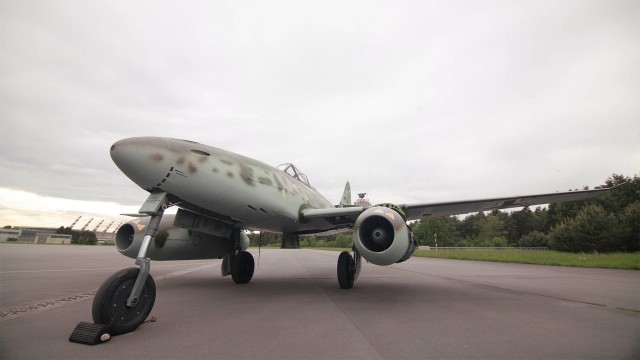
Explore the story behind one of the most advanced aeroplanes of WWII, the Messerschmitt Me 262, and the subterranean bat-cave where it was built.
April 1945. Safe in his heavily fortified Führerbunker in the centre of Berlin, Hitler prepares for the Allies' final attack.
A secret headquarters of concrete and steel is the heart of Hitler’s plans for domination and the key to a Nazi conspiracy - the Wolf’s Lair.
The Bismarck and Tirpitz were battleships of record breaking proportions, ultimate status symbols of the Third Reich and hunted by the Allies.
In a quest for world domination, the Nazis built some of the biggest, deadliest pieces of military hardware and malevolent technology in history.
In retaliation for Allied bombing raids, Hitler ordered the development of the V1. The first cruise missile, it changed the face of war forever.
As America closes in on Japan in 1944, the Japanese turn to desperate new tactics: killer planes and super torpedoes guided by human pilots.
The campaign to breach Hitler's 400 mile-long Siegfried Line took more than six months and cost the American forces 140,000 casualties.
Hitler transformed his Alpine retreat in Bavaria into a fortified fiefdom, home to 2,000 SS troops and protected by a high level security system.
It’s June 1940 and the Nazis have taken the Channel Islands, where Hitler orders some of the most fortified structures in the Third Reich.
Ruins across Europe tell the story of Blitzkrieg, a revolution in warfare which almost gave Hitler the chance to create his Thousand Year Reich.
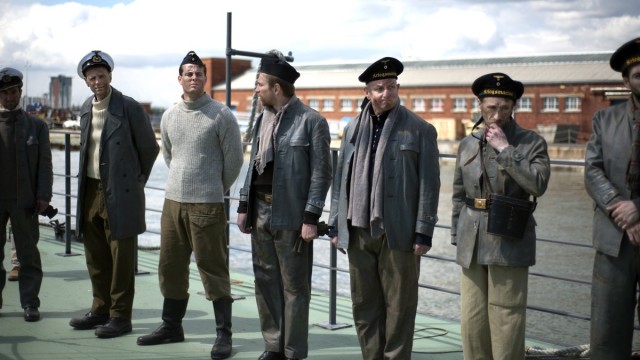
Hitler planned a submarine to outperform all others. The Type 21 was the world's most advanced submarine: Hitler's sea-faring super weapon
In the 1930s the Japanese begin designing the Yamato, the world's most powerful battleship, 30 per cent larger than anything their enemies have.
In 1945 Japanese generals construct a network of defences and tunnels on Okinawa, creating a devastating killing ground for American troops.
The railways were the lifeblood of the Nazi empire. It was a vast network that spread Nazi ambition and control across Europe and beyond. Through use of drama, documentary and archive the programme reveals Hitler's personal train, unseen bunkers, massive depots, railway weapons and record-breaking engines that made up what was arguably the Nazis biggest ever megastructure: the railways.
The rail networks most sinister function was to facilitate the Final Solution. Hitler and the mastermind of the Holocaust, Himmler, used the vast rail network to transport Jews to concentration camps and to their death. But the wider war effort was dwindling and in 1945 in Berlin, Hitler finally abandoned his beloved train and made a dash for his underground bunker - the place that would eventually become his tomb.
The story of one of the Nazis' toughest structures. These defensive lines spanned the Italian peninsula, stalling the Allies for almost two years.
The Luftwaffe, a revolutionary German air force, created from nothing and fast-tracked by Hitler to annihilate the enemy from the skies. From the factory where the deadly Heinkel HE111 bombers were mass-produced, to the Baltic and the ruins of the Luftwaffe's top-secret torpedo test facility to the most technologically advanced jet bomber of World War 2, Nazi Megastructures lifts the lid on Hitler's war from above.
During the brutal Battle of Berlin in 1945, 100,000 German civilians fight to the death and 6,000 commit suicide. How did the Nazis motivate ordinary civilians to fight even when defeat was inevitable? The answer is propaganda, and in Dr Josef Goebbels, Adolf Hitler found a genius of mind-manipulation. This episode reveals the evidence left behind by the Nazi propaganda machine, monuments to the sinister but brilliant brain-washing of an entire nation.
It's one of the most daring and bold operations of WW2: The Nazi's occupation and fortification of Norway. Hitler demands breath-taking defences along the country's 1500 mile coastline to prevent an Allied invasion. It includes some of the biggest gun batteries of the entire war. Norway is an Arctic frontline from which the Nazis can attack the Soviet Union, but it also offers Hitler the possible means to make an atomic bomb.
Artefacts left over from Hitler's invasion of Russia, from the vast weapons built for the German army to the stronghold at Sevastopol where they met their match.
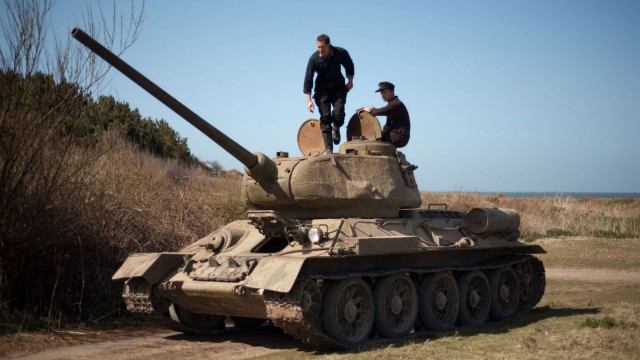
Examining how Hitler responded to defeat at Stalingrad by increasing Germany's mass production of tanks - leading to the largest clash of armoured vehicles in history at Kursk.
Structures built to prevent a Soviet counter-attack against Germany as Nazi forces retreated in the wake of the failed invasion of Russia.
The surprise air attack on Pearl Harbor, revealing how it required months of secret preparation, innovations in torpedo design, and clever counter-intelligence.
How the Japanese army turned to ancient warrior traditions during the battle of Saipan - a conflict where defeat would place US aircraft dangerously close to their home country.
How the German army prepared for the D-Day landings, despite having no evidence of exactly where in Europe the Allied forces planned to attack.
September 1944 on Peleliu, Japanese soldiers build an island-wide structure creating a killing zone that lead to the death of thousands people.
Hitler’s final attempt to win was a surprise winter attack. What resulted were some of the worst war crimes ever committed against America.
This is the story of Japan's final months in WWII - when America threatened to invade and Japan unleashed a terrifying new weapon, suicide bombers.
January 1943. With defeat in Russia and North Africa Hitler now has to face a new battle front; the fight for the skies above the Fatherland itself.
As the Nazi war machine reaches the English channel in 1940, Hitler forms a strategy to destroy Britain's air power and land troops in southern England.
Japan’s do-or-die struggle to create and control an airfield in the middle of the Pacific
Japanese force Allied POWS and Asian laborers to lay 258 miles of track to build the Burma Railway in support of their armed forces during the Burma Campaign.
Armed with one of the most famous generals of WWII, Erwin Rommel, Hitler takes on the Allies in a campaign which will dictate the course of the war.
When allied spies plant false documents on a corpse, they are carrying out one of the most audacious deceptions of World War II. Operation Mincemeat ensures that the allied invasion of Sicily takes the Nazis totally by surprise. With few reinforcements, German troops must now make clever use of the island's rugged landscape to attempt a fighting retreat to the Italian mainland - and safety.
Revolutionary German war machines include the first jet-propelled plane and the U-21 submarine.
During World War II, the German Army construct two extensive lines of defence.
The story of the Nazi geniuses who created Hitler's deadly weapons of vengeance, including the world's first-ever cruise missle and long-range rockets.
A special look at Hitler's personal train, the Nazi's record-breaking engines and the railways' sinister role in the Final Solution.
Der Krieg Nazideutschlands gegen die Sowjetunion brachte eine Reihe trauriger Superlative hervor – von der größten Invasionsarmee aller Zeiten bis zur gewaltigsten Panzerschlacht.
To avert defeat in World War II, the Japanese Empire resorted to a number of unique war tactics, including the infamous kamikaze pilots.
The power of the Nazi state was based on two pillars: the belief in Nazi ideology among broad sections of the population, shaped by propaganda, and the fear of punishment and death for disobedience.
Hitler hoped to win the war against the Allies at sea with enormous battleships and submarines. Both weapons fell short of the naval command's high expectations.
Rapidly operating armored units formed the core of the German "Blitzkrieg" strategy in World War II. What proved successful in Poland and France reached its limits in the Soviet Union.
Following the total ban imposed by the Treaty of Versailles in 1933, the German Luftwaffe experienced a rapid reconstruction. As early as 1936, German units illegally intervened in the Spanish Civil War.
Fortifications were intended to protect the German Reich from the inevitable Allied invasion. "Nazi Buildings" presents important fortifications in Norway and Italy.
The functioning of the railway system was crucial to the war plans of both Germany and Japan. The expansion and maintenance of the railway network often involved the use of forced labor.
The Wehrmacht primarily used large-caliber railway guns because of their long range. During the course of the Second World War, the two largest cannons ever built were also developed.
Before the attack on Pearl Harbor, Japan had expanded its power in the Pacific region by building fortresses and airfields – but the USA responded with an adapted strategy.
Numerous long-serving Nazi Party officials were rewarded by Hitler with important state offices after the "seizure of power" in 1933. A new episode of "Nazi Buildings" presents the inner circle of Nazi power.